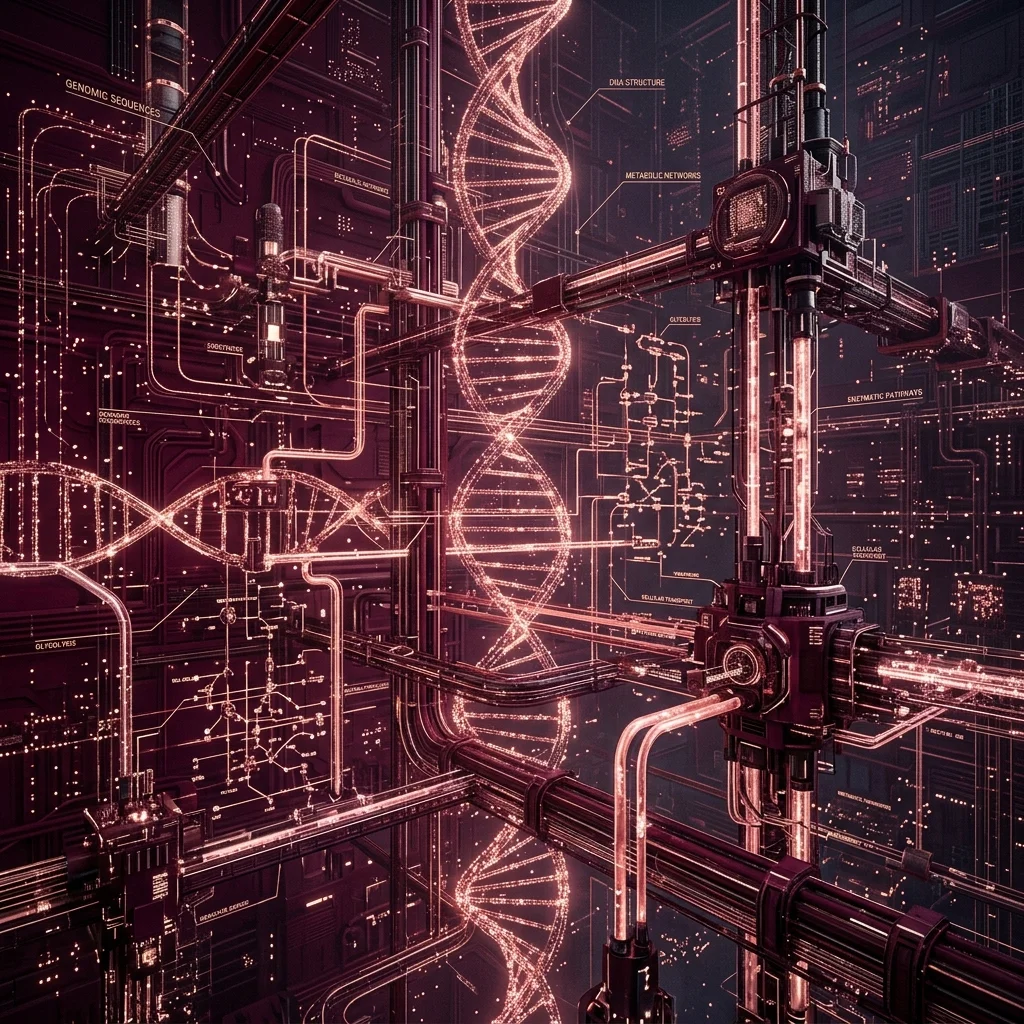
In systems engineering, we define a "leak" as the gradual depletion of resources due to inefficient reclamation. In biological systems, we call this aging. To scale the human lifespan beyond its current 120-year local maximum, we must move beyond the "patching" mentality of modern medicine and enter the era of Systems Orchestration.
Cellular Orchestration: Resolving the "Epigenetic Leak"
The Information Theory of Aging, popularized by Dr. David Sinclair, posits that aging is a loss of digital-to-analog information. Cells lose their identity because the epigenome — the "software" that tells a skin cell it is a skin cell — becomes corrupted by noise.
"Aging is simply the accumulation of lost epigenetic information, leading to cellular identity drift. If we can reboot the software, we can restore the hardware." — Dr. David Sinclair, Harvard Medical School.
Scaling longevity requires the deployment of Epigenetic Resets. By utilizing partial cellular reprogramming (Yamanaka factors), we can theoretically revert cells to a younger state without stripping them of their differentiated identity. This is the biological equivalent of a "System Restore" to a known stable point.
The Bio-Compute Layer: AI and Computational Biology
The hardware and cellular software optimizations described above are only possible through the lens of Computational Biology and massive compute pipelines. Tools like DeepMind's AlphaFold have already demonstrated the power of this approach by effectively solving the 50-year-old "protein folding problem" — a breakthrough that was fundamentally limited by compute availability before the current era of hyperscale AI infrastructure.
It is important to clarify: at Softmotion, we do not develop these biological tools ourselves. Instead, we build the hyperscale infrastructure that makes such tools possible. The structural dynamics of 20,000 human proteins represent a high-dimensional telemetry problem that requires petascale GPU orchestration and specialized inference kernels. We provide the "pipes" that allow biological researchers to simulate millions of metabolic pathways in parallel, identifying cellular "liveness violations" before they manifest as disease.
A Call to Systems Engineers: Do Not Give Up
To the systems engineers reading this: the biological substrate is just another complex system. While the scale of the human genome and the complexity of metabolic pathways may seem daunting, they are not insurmountable. The same principles of observability, redundancy, and formal verification that we apply to global-scale datacenters are the keys to unlocking the next century of human life.
We must not give up on the path toward scaling the human lifespan. The tools are here, the data is accumulating, and the infrastructure is finally catching up. It is a collective human mission to move from accidental biological survival to engineered longevity.